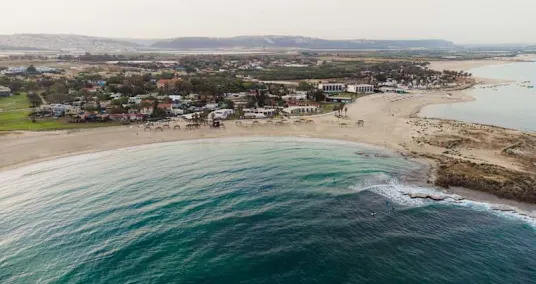
The discovery was made in an ancient shipwreck in the Dor Lagoon near the Carmel Coast, where archaeologists recovered nine pieces of unprocessed iron known as “blooms.”
Researchers from the University of Haifa said Wednesday that an underwater excavation off Israel’s northern Mediterranean coast uncovered what they described as the earliest known cargo of raw iron transported by ship, dating back around 2,600 years, Xinhua reported.
The discovery was made in an ancient shipwreck in the Dor Lagoon near the Carmel Coast, where archaeologists recovered nine pieces of unprocessed iron known as “blooms.” According to the university, the find provides direct evidence of how iron was transported in its earliest commercial stages.
The material was preserved in its original form, having solidified directly in a smelting furnace without undergoing forging or further refinement. Researchers said this distinguishes the cargo from later iron artifacts that typically show signs of shaping or tool-making.
Unlike copper and bronze, which could be melted into liquid form in ancient production processes, iron was heated with charcoal to produce a solid, porous mass. That mass was generally hammered to remove impurities and create denser material suitable for tools and implements.
The recovered blooms showed no indication of that secondary processing stage, suggesting they were transported immediately after production.

Earliest iron shipment discovered in ancient Mediterranean wreck
To determine the age and condition of the cargo, researchers conducted microscopic and chemical analyses.
Radiocarbon dating was also carried out on charred wood embedded in one of the pieces, helping confirm the timeline of the shipment. The findings were published in the journal Heritage Science.
Researchers said the cargo indicates that iron was being moved in raw form from production sites to other locations for further processing, pointing to a level of specialization in ancient manufacturing and trade networks in the Mediterranean.
The University of Haifa said the discovery provides new insight into early iron production and distribution practices in the region.
LATEST POSTS
- 1
 Instructions to Clean and Really focus on Your Lab Precious stone
 - 2Changes to CDC website spark debate over autism and vaccine misinformation
- 3Nigeria’s return to Windsor castle signals new era in UK economic partnership
- 4How to track NASA’s Artemis II and Orion’s journey to the moon
- 5The 15 Most Rousing TED Chats on Self-awareness





- Two policemen injured at religious youth protest in Jerusalem marking Ahuvia Sandak's death
- Best Amusement Park in Europe: Where Do You Very much want to Visit?
- the Kinds of Thailand: Decision in favor of Your Number one Thai Dish!
- Tickets for 'Stranger Things' Season 5 finale, to be shown in movie theaters on New Year's Eve, go on sale today. Here's how you can save your seat.
- From Fledgling to Master: Self-awareness in a Side interest
- Eight wounded, cars catch fire in central Israel following strike from Iranian cluster munition
- After fleeing past Hezbollah fighting, some Israelis on northern border vow to stay
- Vote in favor of your Favored kind of footwear
- Iran slams UN nuclear watchdog for failing to condemn Bushehr attacks