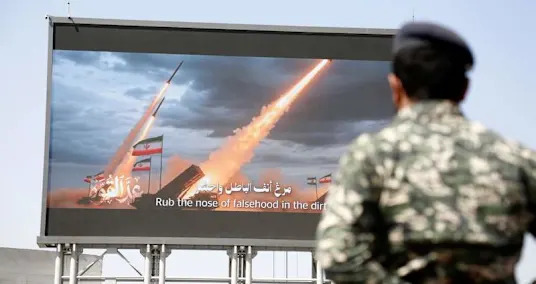
Iran and its Lebanese Hezbollah militia proxy on Thursday fired rockets again at Israel, where people are currently celebrating Passover.
In the morning, warning sirens sounded repeatedly in northern Israel. Two men were slightly injured by a Hezbollah rocket, the Magen David Adom emergency service said.
An Iranian rocket also aimed at the north was fitted with cluster munitions, Israeli media reported. The use of cluster munitions is widely banned internationally because they can scatter explosive devices uncontrollably over large areas and are particularly dangerous for civilians.
There was also repeated fire at Israel overnight. A rocket alert was triggered in the coastal metropolis of Tel Aviv, among other places. Magen David Adom reported several people with minor injuries from broken glass in a suburb of Tel Aviv, including two babies.
The week-long Passover festival began on Wednesday evening for Jews around the world. It commemorates the exodus of the Israelites from Egypt and their liberation from slavery.
LATEST POSTS
- 1
 Colorado residents face earliest water restrictions ever — a harbinger of worse to come
 - 2Sanofi to acquire hepatitis B vaccine maker Dynavax for $2.2 billion
- 3Exhaustive Experiences into Prudent Senior Living in the UK
- 4Mississippi Insight for Jan. 11, 2026
- 5Sources: IDF does not actually know how many ballistic missiles Iran has left



- Israel violated ceasefire with Hezbollah more than 10,000 times, UNIFIL claims
- Timex Gives Its Classic Affordable Field Watch a Tactical, Milspec Makeover
- The Main 15 Applications for Efficiency and Association
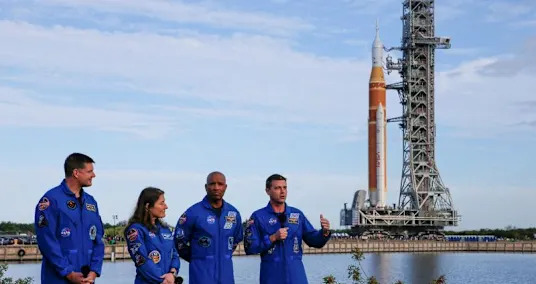
- NASA's Artemis astronauts enter final preparations for Moon mission
- Experiences in Natural life Protection: Individual Progressives' Excursions
- Cyprus urges hotels to open up, pours funding into tourism
- Ariana Grande says Eternal Sunshine 2026 tour will be her last for a 'long, long time': 'One last hurrah'
- You finally got a doctor's appointment. Here's how to get the most out of it
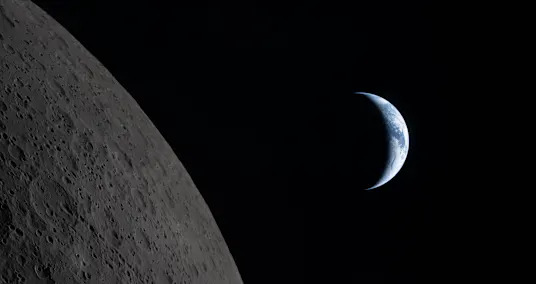
- NASA releases stunning new images captured by the Artemis II moon mission, including 'Earthset' and a solar eclipse from space