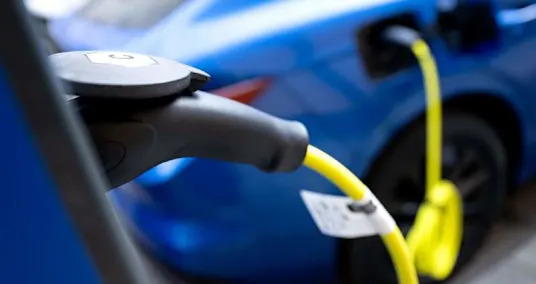

Registrations of new electric vehicles in Germany surged by 66.2% year-on-year in March amid soaring prices at the pump, the national motor transport authority said on Tuesday.
Some 71,000 electric vehicles were registered over the month, up from 43,000 in February.
The proportion of new electric registrations came in at 24% in March, up from 22% in February and well up from the 16.8% posted in March last year.
The surge in purchases came as oil prices have soared in recent weeks due to the Iran war, resulting in rising bills for motorists.
Consultancy firm EY said that new state subsidies of up to €6,000 ($6,930) per car were having an effect on electric vehicle registrations, which had posted the highest figure since the 87,000 units recorded in August 2023.
EY analyst Constantin Gall sees a possible market share of 25% for electric vehicles for the year as a whole, with the first quarter coming in at 22.8%.
"A large majority of new car purchasers are still deciding on a combustion engine, and nothing will change here for the present, despite high fuel prices, despite billions in state subsidies and despite new electric models with improved range and charging times," he said.
There were more than 294,000 new registrations in Germany in March, 16% more than in February. The figure for the first quarter was up 5.2% on the year.
But Gall noted that a weak economy, geopolitical crises and wars were depressing consumer sentiment.
LATEST POSTS
- 1
 Track down Your Optimal Conservative Vehicle: Famous Brands to Consider
 - 2Coca-Cola Co. and bottlers to invest in South Africa operations
- 3Supreme Court case about ‘crisis pregnancy centers’ highlights debate over truthful advertising standards
- 4Become the best at Discussion: 6 Procedures for Progress
- 5EU-funded BioSupPack project turns brewery waste into bioplastics





- Paul Feig loves a plot twist. Why not reboot 'Die Hard' starring a woman?
- A definitive Manual for Choosing Indoor Plants Ideal for Your Space
- European nations criticise Israel’s death penalty plans
- Israel strikes Beirut amid rocket fire from Hezbollah and Iran
- Obamacare enrollment declines as US subsidies expire
- South Carolina confirms 124 new measles cases as outbreak on the Arizona-Utah line grows
- 21 Incredibly Interesting Contemplations To Observe Consistently
- JFK's granddaughter reveals terminal cancer diagnosis, criticizes cousin RFK Jr.
- Met Gala 2026 will celebrate fashion as an 'embodied art form': A guide to the theme, dress code, cochairs and hosting committee of the starry event