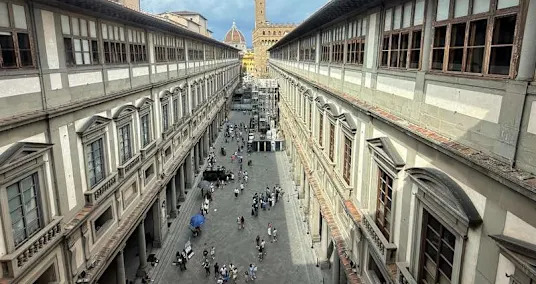
Treasured exhibits have reportedly been moved to safety at Florence's world-famous Uffizi Gallery following a cyberattack earlier this year.
According to a report published on Friday in the Corriere della Sera daily, the unknown perpetrators have already attempted to use the stolen data to extort money from the museum in northern Italy.
The museum – which attracts more than 5 million visitors a year – has sealed some doorways and emergency exits, the newspaper reported.
In many museums around the world, fears of break-ins have been high since the spectacular heist at the Louvre in Paris, where part of the French crown jewels were stolen in October last year.
Investigative circles suggest hackers have repeatedly managed to breach the Uffizi’s internal database since February.
In the process, they gained access not only to passwords and login details for the photo archive but also to detailed floor plans and the locations of surveillance cameras.
The Corriere della Sera report said valuable items from the treasury of the Grand Dukes of Tuscany have been moved from the Uffizi to a vault in the Banca d'Italia.





 Glen Powell will host 'Saturday Night Live' with Olivia Dean as musical guest: What to know ahead of their debut
- 6 Solid Vehicle Fix Administrations to Keep Your Vehicle in Prime Condition
- Senegal president signs tough new anti-LGBT law doubling jail terms
- Don't miss the waxing moon swing by the Beehive star cluster March 27
- Porsche May Kill the Electric Boxster Before It Ever Arrives
- When fake data is a good thing – how synthetic data trains AI to solve real problems
- At least 55 injured in Russia after train crashes, overturns
- Exploring the Gig Economy: Illustrations from Consultants
- The Most Famous Virtual Entertainment Powerhouses of the Year